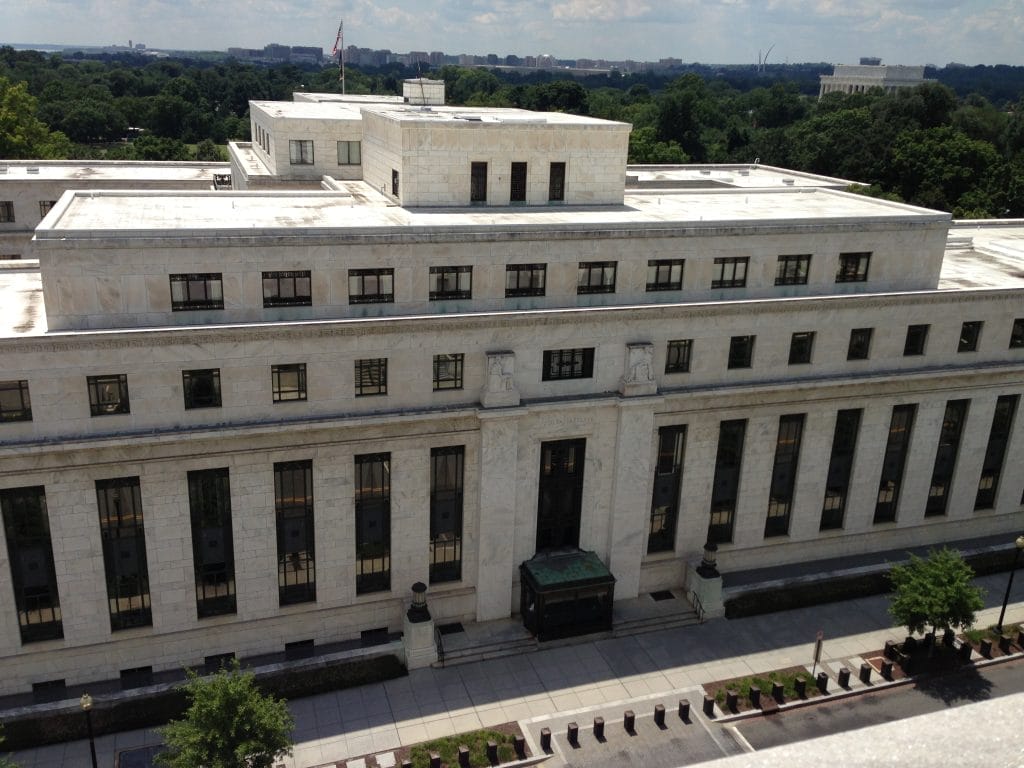
President Donald Trump has said he intends to nominate Kevin Warsh as the next Chair of the Federal Reserve, to succeed Jerome Powell when Powell’s term ends in May 2026, subject to Senate confirmation. The announcement is politically charged. Trump has repeatedly pressed for lower interest rates, while critics have framed the succession battle as a test of Federal Reserve independence, especially amid renewed scrutiny of Powell that culminated in a Department of Justice investigation related to renovation works at the Fed’s Washington headquarters.
Warsh, however, is no outsider. He served on the Federal Reserve’s Board of Governors from February 2006 to March 2011, making him a voting member of the Federal Open Market Committee during the global financial crisis and its immediate aftermath. Under Ben Bernanke, he emerged as a key crisis-era interlocutor with markets, supportive of extraordinary interventions when necessary but consistently alert to the longer-term risks of an expanded central-bank footprint.
That tension defined Warsh’s record. During the QE2 period, he was among those expressing concern about the political economy of large-scale asset purchases, warning that rising commodity prices, dollar weakness, and inflation expectations could eventually force the Fed to reconsider the scale or duration of its interventions. Even when voting with the committee, contemporary accounts portrayed him as uneasy with the signaling effects of quantitative easing. More recently, he has continued to criticise the size and persistence of the Fed’s balance sheet, arguing for clearer limits and a credible path toward normalization. If confirmed, that stance would likely shape how he balances interest-rate policy against the still-elevated stock of securities on the Fed’s books.
Since leaving the Board in 2011, Warsh has cultivated a post-Fed career that spans academia, policy institutions, and the private sector, including roles at Stanford University and the Hoover Institution. That profile may appeal to an administration seeking a chair who can translate between markets, policymakers, and public opinion. But it also raises the stakes for how convincingly he signals independence from political expectations from day one. His record suggests he is unlikely to be the reliably dovish figure Trump has often demanded.
In truth, the central issue is not whether Warsh is a “hawk” or a “dove,” but whether he can preserve the credibility of the Fed’s reaction function, especially on inflation, under unusually explicit political pressure for easier financial conditions. Put bluntly, can he defend the Fed’s independence in the face of sustained pressure from a president who has shown little patience for monetary restraint?
Critics argue that Warsh’s nomination owes less to his monetary philosophy than to his personal connections. Warsh is married to Jane Lauder, granddaughter of Estée Lauder and an heir to one of America’s most influential business dynasties. The Lauder family has long-standing ties to U.S. politics and to Trump personally. Ronald Lauder, a prominent family member, has been a close friend of Trump for decades, dating back to New York’s business and social circles of the 1980s. Lauder has said they first met as students at Wharton. He later served in the Reagan administration, was ambassador to Austria, and ran unsuccessfully for mayor of New York in 1989.
Ronald Lauder also played a role in encouraging Trump’s 2016 presidential run and is widely reported to have floated the idea of purchasing Greenland. More recently, he has been linked to a consortium seeking access to Ukrainian mineral resources, an issue that reportedly influenced Trump’s rhetoric on sharing Ukraine’s assets. Against that backdrop, some observers suspect that Warsh’s selection reflects these connections as much as his past service at the Federal Reserve.
Whether that perception proves fair or not, it underscores the challenge Warsh would face as chair. Markets, lawmakers, and foreign central banks will be watching closely to see whether he governs as a steward of institutional credibility, or as a chair shaped by the political currents that brought him to the role.