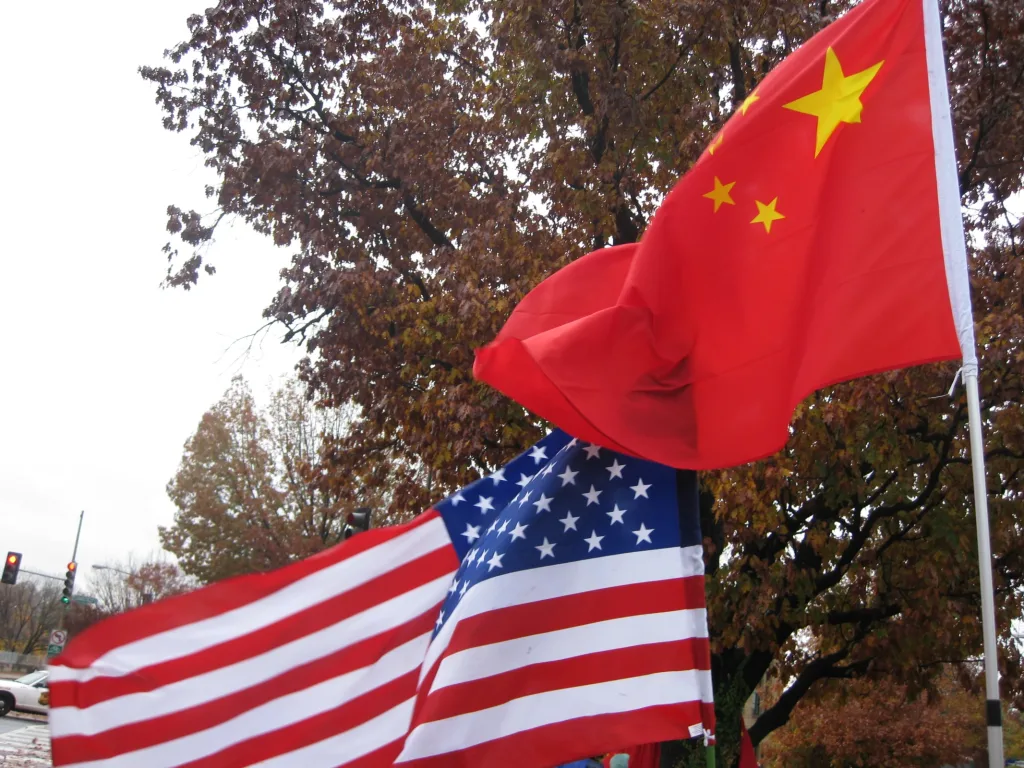
Last week, Chinese President Xi Jinping met his US counterpart Donald Trump in Washington DC, his first visit to the US capital since September 2015. The agenda of the meeting included trade, the status of Taiwan and artificial intelligence, as well as the Iran war, rare earths, agriculture and Ukraine.
Very little was eventually agreed. The trade truce was extended by two months only, moving its expiry from 10 November to 10 January 2027, although many had expected a six-month extension. Beijing’s readout mentioned a “new joint arrangement” on trade without giving a date, and Xi promised a pair of pandas for Atlanta. The readout did not mention tariffs, rare earths or artificial intelligence.
Differences between the two parties cover nearly everything else. On Taiwan, Xinhua reported that Xi urged Trump to oppose Taiwanese independence, while a $14bn arms package for Taipei remains postponed and Trump treats arms sales as a bargaining chip. On Iran, no breakthrough was reported; Trump pressed China to help isolate Tehran economically and reopen the Strait of Hormuz, but Xi merely backed a return to the interim US–Iran agreement. On rare earths, US officials say Chinese deliveries have fallen short, and licensing still lacks a standardised process. On AI, the leaders avoided any agreement on the threats it poses.
Xi repeated that US and China don’t necessarily need to fall into Thucydides’ trap, which foresees that the incumbent power and the rising power eventually end up in an open conflict. Xi argued that competition should be “a race of catching up with one another”, not a zero-sum contest, and should stay healthy and bounded. He used the same line in Seattle in 2015, and its purpose has not changed. Thus, China still advocates for “managed competition” as the only rational option while time, rare-earth leverage and technological catch-up work in its favour. Stability, in other words, is Beijing’s strategy rather than a concession.
In the end, was this meeting more performance or substance? It was mostly performance, but performance with a function. A shorter extension of the trade truce may slightly favour Washington, which keeps renewed hostilities as leverage. The real substance is the frequency of meetings: this was the third in-person meeting since October 2025.
Subsequently, the Kremlin aide Yuri Ushakov confirmed that a trilateral meeting at the upcoming APEC in Shenzhen, on 18–19 November, had been discussed, while Dmitry Peskov, Vladimir Putin’s spokesman, said the Russian President and Trump raised it in their recent phone call. Yet the White House said it had no information on Trump’s participation, and last year he skipped the APEC forum itself. If it were to occur, this would amount to a sort of Yalta 2.0 meeting.
The Yalta analogy comes from 1945, when Roosevelt, Churchill and Stalin divided post-war Europe into spheres of influence without consulting the nations affected. Today’s parallel is three leaders deciding the fate of Ukraine, Taiwan, Iran, Venezuela, and the Western Hemisphere over the heads of Kyiv, Taipei, Brussels and other key capital. For Moscow, sitting at such a table would confirm a superpower status its economy cannot support. The venue matters too: a meeting in Shenzhen would take place on ground of Beijing’s choosing, and in 1945 the host was Stalin, not a Chinese leader. A literal 21st-century Yalta remains improbable, but its logic is increasingly visible. Therefore, if the three do meet, the photograph may matter more than any text, and Europe should read it as a final confirmation of its reduced importance on the global scale.