
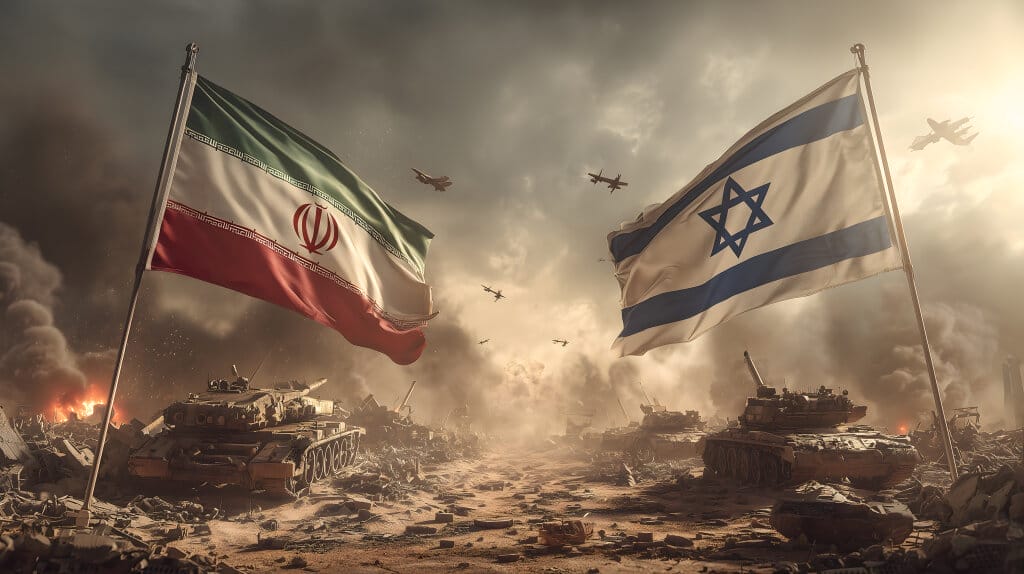
As we are in the middle of this fragile truce between the US and Iran, we can start assessing the long-lasting consequences of this war across four areas: geopolitics, energy, macroeconomy, and finance.
Geopolitics: A New Global Hegemon Starts to Emerge. The war in Iran was ill-prepared for by the US, without a clear target or exit strategy. Its ramifications are now larger than had initially been thought.
The conflict proved that US security guarantees to the Arab Gulf states did not protect them from Iranian retaliation. Thousands of missiles and drones struck neighbouring countries — the UAE, Qatar, Bahrain, and Israel — hitting US military bases and civilian infrastructure despite air defences. These countries must now ask how they can rely on the US without militarising to defend themselves.
Israel wants to continue its war against Iran and its proxies, including Hezbollah in Lebanon. But Iran’s difference within the region will persist under any regime, making regime change in Tehran unachievable. The question is whether the US can restrain its ally and enforce the truce in South Lebanon.
On the other side, Iran was badly damaged but survived. Its new supreme leader, Mojtaba Khamenei — son of the previous leader — is even more radicalised, reportedly influenced by the most extreme elements of the Islamic Revolutionary Guard Corps.
Iran also demonstrated that nuclear weapons are unnecessary to stall the world’s most powerful military: weaponising the Strait of Hormuz and closing it to oil tankers proved sufficient. Iran may now end up controlling this passage with a toll system, much as Egypt controls the Suez Canal.
The China–Pakistan–Iran–Russia bloc emerged stronger. China acted as a responsible superpower, helping broker the ceasefire and convincing Iran to offer Trump an off-ramp in exchange for adopting Iran’s ten-point proposal as the basis for negotiations. Pakistan proved central to the mediation, while Russia benefited from surging oil prices to fund its war in Ukraine. The US, meanwhile, lost moral authority to criticise Russia for invading a country without an immediate threat.
Finally, the war advertised nuclear weapons as the only credible deterrent against foreign aggression — reinforcing the lessons of Libya, Syria, and Iraq. Many more countries are now reported to be seeking one.
Energy: The Hormuz Premium Is Here to Stay. Oil prices jumped above $100 per barrel and will remain elevated, as the “Hormuz Premium” becomes embedded for the foreseeable future. Many countries now recognise they cannot rely on Gulf oil alone and will accelerate the transition to renewables and nuclear energy. China’s electrification programmes across the Belt and Road Initiative will receive additional momentum.
Economic Impact: Mild Stagflation. Rising prices and falling activity echo the stagflationary oil shocks of 1973 and 1979, though the impact is less severe thanks to greater energy efficiency. Central banks face a dilemma: raise rates to contain inflation expectations, or cut them to support growth. Each will decide independently. The viability of Middle Eastern data centres is now in serious doubt. These facilities require peace to operate. US hyperscalers that invested heavily in the region must urgently reassess.
Financial Implications and Digital Currencies. Higher inflation and interest rates drove down equity and bond valuations globally, while energy commodities and safe-haven currencies (USD, CHF, JPY) rallied. Most notably, Iran’s Hormuz toll was reportedly paid in Bitcoin and e-CNY, and oil purchases shifted away from dollar settlement. The petrodollar system now faces existential risk, paradoxically boosting China’s de-dollarisation agenda. Some suggest the dollar could be re-anchored to data-centre “compute”. That is possible, but is far from a foregone conclusion.


