
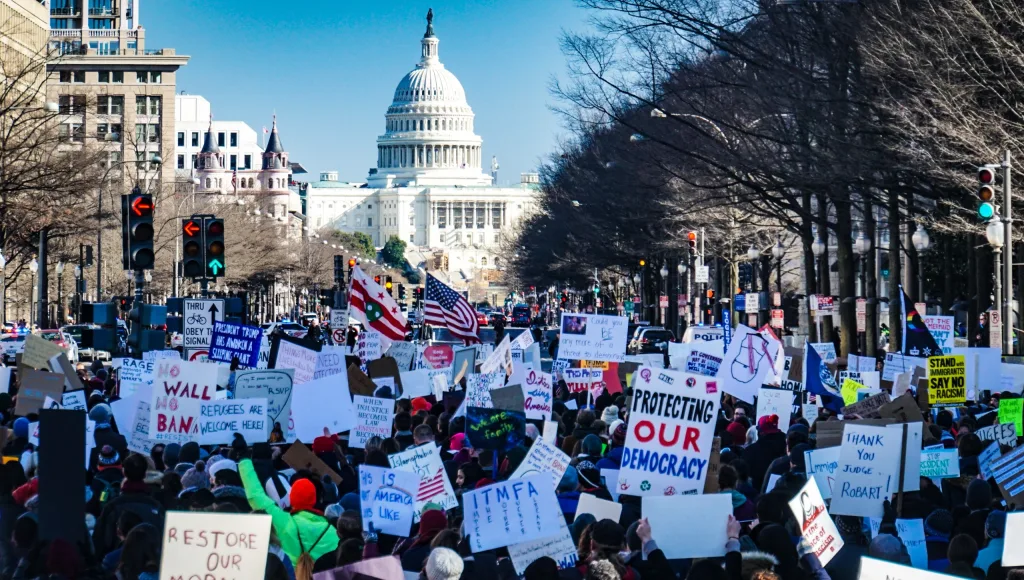
The numbers are unambiguous, and they are not the numbers of a president who intends to face the electorate calmly. The FT’s Focaldata survey of 1,913 registered voters finds more than 53% saying their finances have deteriorated since January 2025; among independents the figure approaches 57%, and — the datum that should concentrate minds in the West Wing — nearly a quarter of self-identified Republicans concur. Trump’s disapproval on inflation and living costs stands at 64%, his net approval within his own party has fallen eight points in a month, and Democrats lead the generic ballot 44% to 39%.
The macro backdrop corroborates the sentiment rather than contradicting it: headline inflation at 3.4% sits above the level inherited from Biden, real wages fell last month, consumer sentiment has collapsed towards record lows, and the Iranian war has done what wars reliably do to borrowing costs and petrol prices. This is not a communications problem; it is an economic and political one.
As the majority of voters feel worse off under Trump, the temptation of “going socialist” increases. The number of members of the Democratic Socialists of America has reached roughly 130,000, up from 5,000 fifteen years ago. The association has scored primary victories from Brooklyn to Denver to Michigan. However, the same FT poll cited above that records the economic misery also records what Democratic voters actually want: inflation contained, jobs protected, social security and Medicare defended. Fewer than one in five endorse the DSA’s signature positions on ICE, Israel or the federal minimum wage. Has a proof of this, the “socialist candidate” Francesca Hong lost her primary election in Wisconsin.
If anything, the more revealing development is the convergence between Republicans and Democrats: an administration contemplating equity stakes in artificial intelligence firms and restrictions on institutional purchases of single-family housing, alongside a vice-president advocating stronger unions. Both parties have concluded that markets alone will not deliver; they differ chiefly on who administers the intervention.
Given economic dissatisfaction, historically the result is a landslide victory of the opposition party in the mid-term elections. We have already discussed how Trump will try everything to prevent this from happening. This week, he refused to deny a possible federal takeover of elections, citing “a national security emergency” that would give him the possibility of imposing voter identification, citizenship proof and mail-ballot restrictions, giving the Republican party a massive headstart in the race.
How likely is it? Legally it is close to nothing. The Constitution assigns the regulation of federal elections to Congress and the states; the Justice Department has lost more than twenty cases seeking voter data, several before Trump’s own appointees; the executive orders on mail voting have been struck down and now sit before a Supreme Court asked to permit sweeping change weeks before polling day. The operational risk is real but bounded. The institutional risk is not: an Election Assistance Commission stripped of quorum, CISA gutted, and election workers reporting harassment at scale constitute a machinery degraded precisely where contested outcomes are adjudicated. The Democrats are reportedly preparing exactly for this scenario.